The Corkboard Canon: Britain's Noticeboards Are Quietly Making Folk Art
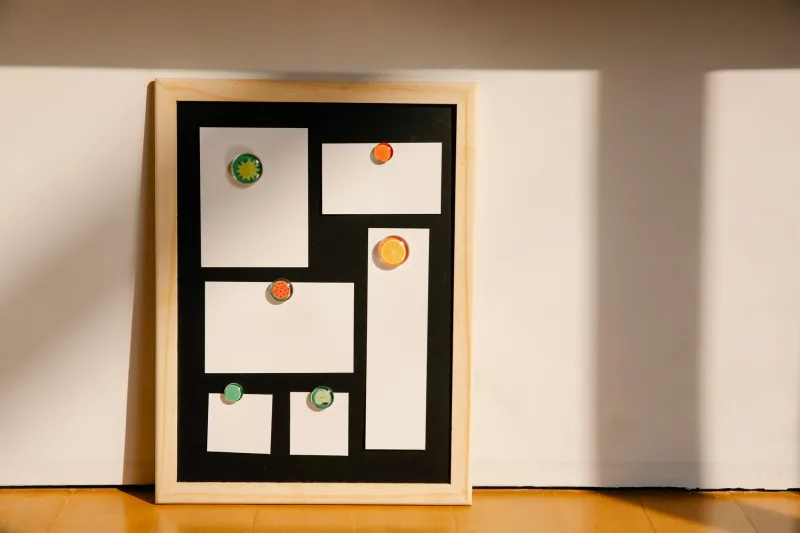
You do not go to a village hall for the village hall. You go for the noticeboard in the lobby, the one that has been quietly assembling itself since roughly 1994 and now hangs off the wall like a well-dressed accusation.
There is no press night. No wall texts, no invigilator, no gift shop. Just cork, drawing pins and the accumulated hopes of a parish: a jumble sale, a choir in need of tenors, a cat called something undignified, three separate beginners' yoga classes that have all chosen the same shade of lilac A5.
Admission free, open from dawn
Britain has thousands of these galleries. They live in church porches and Post Office lobbies, on the gates of allotments, in launderettes, in the window of the corner shop next to the newspaper display, behind the glass of a bus shelter where nobody has removed anything since the timetable changed. The curators are anonymous. The hanging policy is chaos. The footfall is extraordinary.
And unlike almost every other exhibition space in the country, these boards are read. Properly read. People stop, lean in, take a photograph of a phone number. In an age of infinite scroll, the noticeboard remains one of the few places where a stranger will read a full paragraph of unsolicited text because it is physically in front of them.
A field guide to the typography
The typographic register is entirely its own and wildly consistent across the country. Comic Sans, still, always, unrepentant. Papyrus reserved for anything involving wellness or a harp. A single WordArt flourish from a computer that has not been switched on since 2008. Clip art of a mouse, a pint of beer, a pair of scissors, dropped in wherever the layout felt a bit lonely.
Then there are the corrections, which are the real connoisseur's pleasure. A date printed in bold, over-taped with a handwritten amendment in biro. A 'SATURDAY' scored through and replaced with 'SUNDAY', the lettering getting larger as the writer runs out of room. And the beloved 'SORRY — CANCELLED' strip, applied at an angle, itself now four years old.
The accidental design decisions are the best of it. Two fonts fighting. A paragraph forced into a box that was never big enough, so the last word shrinks. Everything centred, nothing aligned, and somehow the whole thing still tells you exactly what you need to know in under four seconds. Graphic designers spend careers trying to be that direct. Here it happens by accident, in Word, at eleven at night, by a woman called Jan.
The laminate hierarchy
Once you start looking, a social order reveals itself.
A proper glass-fronted display case means institution — the parish council, the library, the sort of place with a key. A bare corkboard means community: hopeful, temporary, slightly sagging. Items in a poly pocket are aspirational, someone has thought about the weather. Items held with drawing pins are confident. Items stapled are hurried. Items attached with a single curling strip of Sellotape are already lost, and everybody knows it.
Lamination, though, is the true marker of commitment. A laminated poster has been through a printer's queue and a conversation about the cost. It says: this is happening, and it is happening annually, and we have learned from last year's rain.
The tear-off tab economy
Down the bottom, always, the little fringed row of tabs with a mobile number repeated eleven times. It is Britain's most elegant piece of micro-design and its most quietly ruthless social contract. Take a tab and you have entered into something. Take two and you are a monster.
You can tell how the year is going by how many tabs are left. A full fringe in November suggests a piano teacher with a marketing problem. A single lonely tab suggests either enormous demand or a phone number belonging to someone who has since moved to Spain.
Recurring characters
Every board has a canon, and the canon repeats itself with almost eerie devotion.
The Fayre That Never Was: a poster for an event so old the paper has gone the colour of weak tea, still pinned at the top right, never removed, now structurally load-bearing. The Missing Cat: photographed mid-blink, described as 'friendly but nervous', last seen three streets away, the poster refreshed every fortnight in an act of pure stubborn love. The Beware sign, in furious capitals, referring to a dog, a van, a hole, or nothing identifiable at all.
And then the classifieds with their compressed poetry. 'Piano, good condition, buyer collects.' 'Twin tub, works.' 'Free to good home, must go this week.' These are the shortest stories in Britain and the most complete.
Where to look in 2026
The digital version exists and it is worse. Local Facebook groups do the same job — lost cats, free sofas, choir notices — but they are sorted by an algorithm and read by nobody who was not already looking. The noticeboard asks nothing of you. It is simply there, in the porch, in the rain, and it will still be there when you come back from wherever you went.
So make a small project of it this year. Next time you are in a town you do not know, ignore the high street's branded windows and find the door of a church, a village hall, a laundrette, a bowls club. Stand in front of the board for two minutes. Read the whole thing.
You will find out more about the place than any guidebook will tell you — what it sings, what it sells, what it has lost and who is still looking. It is the most underrated gallery in Britain, and the only one where every exhibition is a group show and the door is never locked.