Two Pence, Plenty of Style: The Seaside Arcade's Design-Led Comeback
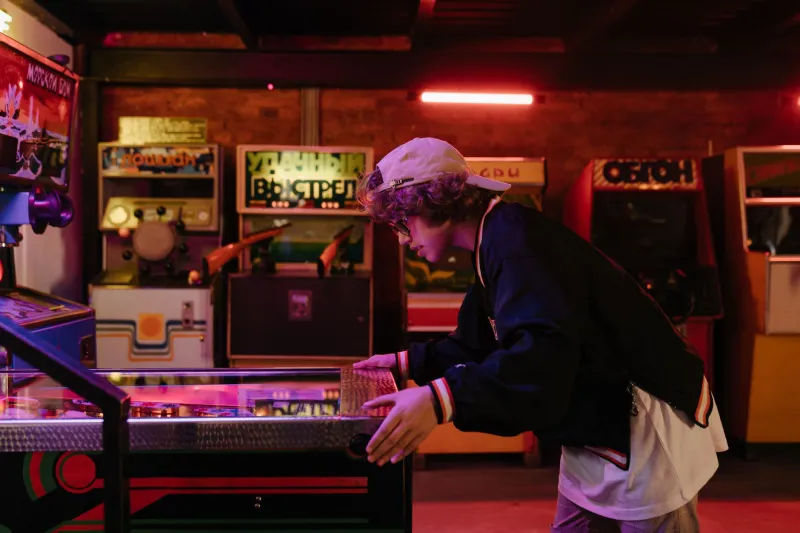
The seaside arcade has long been a place of cheerful chaos: sticky carpets, flashing lights, the smell of hot dogs and sea air. It is not the first setting you would associate with design curation. But something has shifted. Across the UK, a new wave of arcade owners is applying a considered eye to the amusement hall, restoring vintage machines, rethinking the interior, and treating the whole experience as something closer to a gallery than a fairground.
The result is a strange and lovely hybrid. You can still lose 2p on a penny fall, but you can also drink a glass of natural wine while you do it. The machines are lit like objects of desire. The typography on the signage is intentional. The carpet might still be loud, but it is loud on purpose.
The new amusement hall
The best of these spaces understand that the arcade is already a design object. The cabinets, the marquees, the chrome, the mechanical sounds: it is a mid-century visual language that has been overlooked for decades. The revival is not about modernising it out of existence. It is about cleaning it up, editing it down, and letting the original charm do the work.
That means careful restoration of vintage machines rather than rows of generic claw-grabbers. It means lighting that flatters the cabinets instead of bleaching them. It means a bar that serves something better than bright blue alcopops. And it means a layout that encourages you to linger, rather than herd you towards the exit.
Margate: The Electric Paragon
The Electric Paragon sits a stone's throw from the seafront and has become a cult stop for design-minded day-trippers. The interior is a lesson in restraint: original arcade cabinets, warm bulbs, a long chrome bar, and a jukebox that actually works. The owners have kept the penny falls but replaced the surrounding clutter with space. You can hear the machines. You can hear the sea.
The drinks list is short and good: natural wine, local beer, a couple of well-made highballs. The crowd is a mix of locals, London escapees, and people who came for the Turner Contemporary and stayed for the arcade. On a rainy Sunday, it is the best room in town.
Morecambe: The Crown Arcade
Morecambe's Crown Arcade has taken a different approach. It leans into the town's faded seaside history without turning it into a pastiche. The signage is hand-painted. The machines are a mix of restored classics and working antiques. The owner, a former graphic designer, has a clear rule: nothing that beeps in an ugly way.
The result is an arcade that feels like a living room for the town. Families come in the afternoon, but by early evening it shifts into something else: a low-key date spot, a place to meet friends, a reason to stay out after the sun goes down. The bar serves local gin and a decent negroni. The penny falls are still the main attraction.
Brighton: The Silver Ball
The Silver Ball is the most polished of the three, and the most overtly design-led. The interior is all soft lighting, terrazzo, and curved edges. The machines are arranged like exhibits, but they are all playable. There is a small shop selling zines and risograph prints. The wine list is longer than you would expect.
It would be easy to accuse a place like this of gentrifying the arcade, but the effect is the opposite. By treating the machines with respect, it makes them more accessible. People who would never have set foot in a sticky-floored amusement hall are now playing penny falls and asking questions about the mechanics. The 2p slot becomes a conversation starter.
The 2p slot as design object
The penny fall is a strange, beautiful thing. It is a simple machine: a shelf, a moving bar, a pile of coins. But the physics are endlessly satisfying. The way the coins stack, the way a single 2p can dislodge a small fortune, the way the machine teases you with a near-miss. It is analogue gaming at its most pure.
The new arcade owners have understood that this is not just a game; it is a ritual. The sound of coins dropping, the collective groan when the shelf clears, the small thrill of winning back your own money: it is a shared experience. The design-led revival simply frames it better.
Is it Britain's most underrated night out?
Possibly. The seaside arcade has several things going for it. It is cheap. It is social. It is not trying to be cool in a way that makes you feel uncool. You can spend an hour or three, and the stakes are low enough that you never feel foolish. Add a decent bar and a considered interior, and you have a night out that feels both nostalgic and new.
The catch is that these places are seasonal. Many arcades still close in the winter, and the ones that stay open rely on local trade. But the best of them are proving that the arcade can be more than a rainy-day diversion. It can be a design destination, a community room, and a genuinely good time.
So next time you are by the sea, skip the obvious bar. Find the arcade with the good lighting and the natural wine. Put a few 2p coins in your pocket. You might be surprised by how much style there is in small change.