Nine Square Metres of Me: A Field Guide to the British Allotment Shed
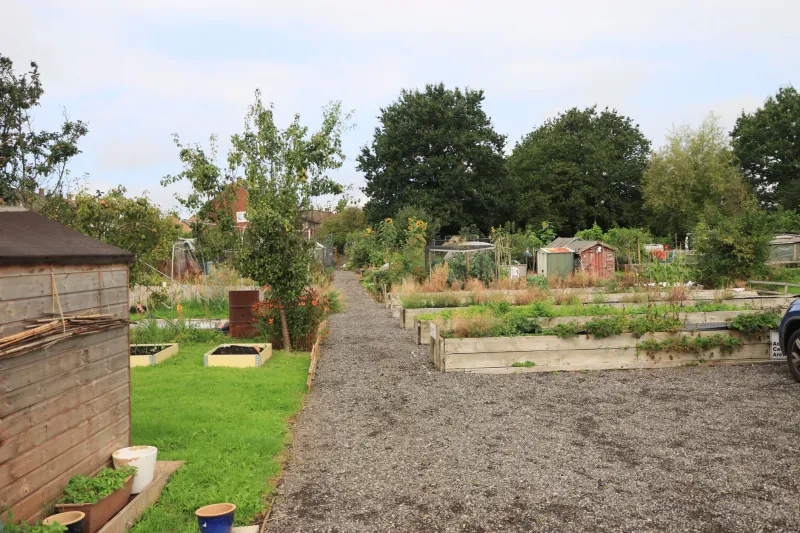
There is a particular sort of November light on an allotment site: low, silver, slightly apologetic. It picks out the greenhouse glass, the last brave runner beans, and then — always — the sheds. Ranged along the paths like a small, disobedient village, they are the most personal buildings in Britain. Not because they are grand, but because nobody was watching when they were made.
A house is a negotiation: planners, neighbours, mortgage, taste. A shed is a monologue. It is nine square metres of pure autobiography, usually held together with galvanised nails and a feeling. And while the garden gets the glory — the courgettes, the dahlias, the heroic leeks — the shed is where the plot-holder’s actual design philosophy lives. It is Britain’s smallest architecture movement, and it has never once issued a press release.
The door tells you first
You can read a shed from the path. Start with the door, because the door is the title page.
A plain, well-hung door in a deep green or oxblood suggests a person who owns a spirit level and, more worryingly, opinions about other people’s guttering. A door that has been rehung twice, with one hinge slightly proud and a padlock hasp screwed on at an angle, suggests a person who works in bursts of enthusiasm and has never met a problem that couldn’t be solved with a cup of tea and a longer screw.
Then there are the doors that are not really doors: a sheet of ply, a reclaimed stable door, a panel from a dead wardrobe. These are the romantics. They have looked at a piece of rubbish and seen a future. The paint is often the giveaway — not the colour, but the layering. Farrow & Ball tends to arrive first, usually on a Sunday. Cuprinol follows, in a moment of Saturday pragmatism. By the third coat, the owner has stopped pretending this is about preservation and admitted it is about identity.
And the signage. A hand-painted “PLOT 14” in wonky capitals is a statement of belonging. A laminated A4 notice about slug pellets is a statement of war. A small ceramic plaque reading “Shed” is a statement of humour so dry it could be used to sharpen tools.
Windows of opportunity
Britain’s allotment sheds have the most inventive glazing in the country. Nobody is ordering bespoke frames. They are using what came out of a skip, a neighbour’s conservatory, or the back of a van in the pub car park.
You will see a single pane of greenhouse glass, held in with putty the colour of old teeth. You will see perspex, scratched to a soft fog. You will see a frame that was clearly once a picture window in a 1930s semi, now doing service above a potting bench, its proportions entirely wrong and somehow perfect. The result is a sort of accidental modernism — wonky, daylight-hungry, unbothered by symmetry.
It is also practical. A shed window is not for looking out, exactly. It is for letting in enough light to find the secateurs and enough glare to remind you that you should be outside, doing something. The best ones are small, high and slightly dirty. They give the interior the atmosphere of a chapel that smells of compost.
The kettle corner
Every serious shed has a kettle corner, and the kettle corner is where the design gets honest. A camping stove, a chipped enamel mug, a tin of teabags that has known better decades. A jar of sugar that has fused into a single brown geology. A bottle of washing-up liquid with a green trickle down the side.
This is not scruffiness. It is a social algorithm. The kettle corner says: sit down, you’re not in a hurry, tell me about your brassicas. It is the smallest room in Britain with a hospitality policy. Some sheds go further — a two-ring burner, a few mismatched chairs, a transistor radio permanently tuned to something crackly. These are the clubhouses. You can tell because there is a jar of instant coffee and nobody is pretending it’s for one person.
Noticeboard shrines
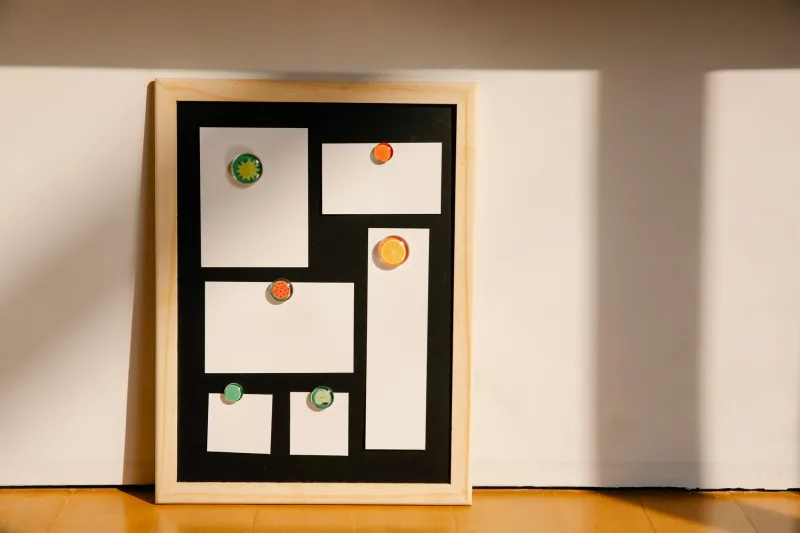
The back wall is where the shed becomes a museum of itself. A corkboard, or a square of hardboard, or simply the bare wood, covered in a collage of seed packets, faded photographs, plot rules, newspaper clippings, a child’s drawing of a sunflower, a receipt for something long returned.
These are not decorations. They are evidence. The seed packets are a record of ambition — the year you tried to grow aubergines, the year the mice won. The photographs are usually of other plots, or other sheds, or people holding enormous marrows with the expression of someone who has just won a small but meaningful war. The notices are the lore: water restrictions, bonfire rules, a warning about the man in the blue van who is definitely not a member.
A noticeboard shrine is the closest thing Britain has to a domestic altar. It is where the plot-holder pins their version of events.
A field guide to reading a shed
Before you meet the owner, look for the following. A shed with a neatly swept path, a boot scraper and a small sign asking you to close the gate: they will offer you tea and then talk for forty minutes about drainage. A shed with a deckchair outside and a wind chime made from old cutlery: they will offer you something stronger and possibly a courgette. A shed with a security light, a padlock and a handwritten warning about tool theft: they have been here longer than you and have the receipts.
A shed with a satellite dish is not showing off. It is simply a person who has decided that the Test match and the potting on can coexist. A shed with curtains is a person who understands that dignity is a relative concept. A shed with a small stained-glass panel, clearly salvaged from a church jumble sale, is a person who knows exactly what they are doing.
What the shed knows
The allotment shed is not a design movement in the way that the Shard is a design movement. It has no manifesto, no awards, no Instagram account. But it is architecture that has been allowed to be itself. It is creosote and improvisation, a kettle and a corkboard, a door that doesn’t quite close and a window that lets in just enough light to see what you’ve got.
In a country that loves to regulate the front of the house, the shed is the back of the house — the part that tells the truth. And in November, when the plots go quiet and the light is low, that truth is still standing there, nine square metres of it, waiting for someone to put the kettle on.