The Change Is in the Tin: Britain’s Roadside Stalls and the Art of Buying on Trust
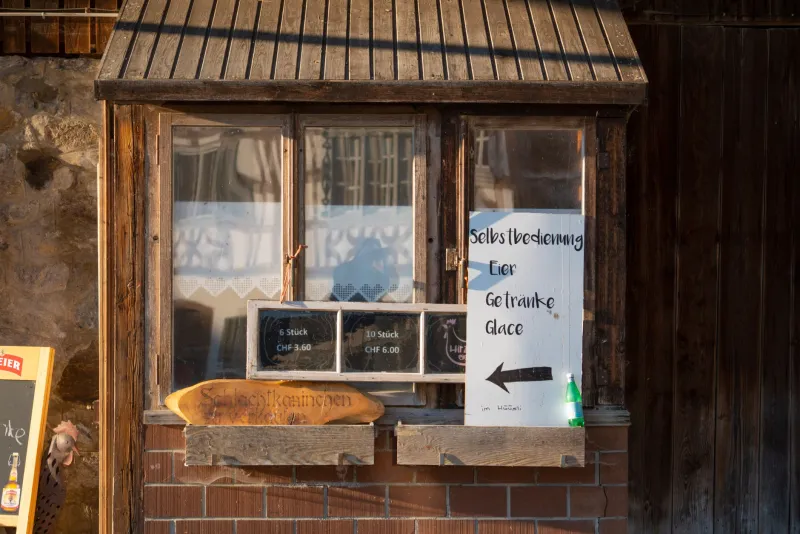
Somewhere between a farm shop and a folk museum, there is a table at the end of a lane. It holds a few punnets of eggs, a pyramid of courgettes and a tin that has done more for community relations than most parish councils. There is no till, no queue rope and no one to ask if you need a bag. This is the British honesty box, and it is one of the country’s most quietly radical pieces of retail design.
At Pelia, we tend to look at these things with a design critic’s eye and a shopper’s appetite. The honesty box is not just a place to buy runner beans. It is a tiny piece of civic infrastructure, a roadside installation, a self-service lesson in manners. In 2026, when every high street is being asked to justify itself, these unstaffed stalls keep proving that retail can be simple, local and strangely moving.
The Gate as Shopfront
The first thing you notice is the improvisation. A farm gate opens onto a table made from a pallet. A shed has been repurposed as a kiosk, its shelf lined with jam jars and chutney. In Norfolk, a wooden honesty box might sit under a tarpaulin; in Yorkshire, an egg stand could be an old tea crate with a laminated price list. In the Cotswolds, the flowers are arranged with the kind of care that suggests someone has stepped back to check the composition before going back to the house.
This is shopfront design without a shopfront. The gate is the doorway, the lane is the approach, the handwritten sign is the window display. There is no logo, no brand palette, no customer service script. Instead there is a piece of cardboard with the word eggs in marker pen, and somehow that is enough. The modesty is the point. These stalls do not shout. They wait.
A Language of Tins, Signs and Fivers
Every honesty box speaks its own dialect. A biscuit tin is the classic cash receptacle, though a jam jar, a Tupperware box or a small metal safe will do. The sign might say exact change appreciated, please close the gate, or simply thank you. A QR code may be taped to the side for card payments, a modern addition that sits alongside the old coin tin without much fuss. The result is a hybrid retail language: analogue trust with digital backup.
Look closely and you can read the local economy. A fiver left under a stone. A note asking for change. A price list that has been corrected in biro. The handwriting is often the most human thing in the whole landscape: looped, cautious, occasionally furious about people taking too many eggs. These signs are not polished, but they are precise. They tell you what to do, what not to do and how much to pay. They are instructions, invitations and small acts of faith all at once.
The Architecture of Almost Nothing
The structures themselves are a lesson in making do. A shelf under an awning. A cool box for dairy. A plastic tub for money, weighted down against the wind. Some stands are little more than a table and a sign; others have proper roofs, chalkboards and lighting. The best ones feel like miniature buildings, with a clear sense of entrance, display and payment point. They are architecture at its most modest and most functional.
There is also a pleasing honesty in the materials. Galvanised metal, weathered wood, tarpaulin, string, a bit of slate. Nothing is pretending to be anything else. In a world of staged retail interiors, the roadside stall is refreshingly direct. It does not need mood lighting. The weather provides that. It does not need a playlist. The birds are already doing the sound design.
Etiquette, With Produce
Buying from an honesty box comes with an unwritten rulebook. Take only what you need. Leave the right money. Close the gate. Do not rummage through the best produce and leave the rest. If you have to ask whether you can pay by card, the QR code is probably your answer. If you have no change, you either wait, come back or accept that the courgettes were not meant for you today.
The etiquette extends to the stallholder too. They trust you not to empty the tin. You trust them not to sell you eggs that are three weeks old. It is a small social contract, renewed daily. Sometimes it fails, of course. There are stories of missing cash and missing produce. But the system keeps going, which is the interesting part. The honesty box is not naive. It is a calculated risk, and it usually pays off.
Why Trust Still Looks Good
There is a reason these stalls feel so charming, and it is not just nostalgia. They are a visible expression of local trust, the kind that is hard to manufacture and easy to overlook. They make the countryside feel inhabited rather than decorative. They turn a lane into a high street, a gate into a shopfront, a tin into a till.
For a design lover, the honesty box is a reminder that good retail does not always need a big idea. It needs a clear one. Put the produce out. Tell people the price. Trust them to do the right thing. It is a model that many brands spend fortunes trying to recreate, and here it is at the end of a farm track, with a handwritten sign and a box of eggs.
Next time you pass one, slow down. Take a look at the sign, the shelf, the tin. Buy something if you can. Leave the change. Close the gate. It is a small transaction, but it is also a small piece of theatre, and Britain is better for keeping it on the road.