The Deep End of Democracy: A Design Lover’s Guide to the British Leisure Centre
You can smell a British leisure centre before you can see it. It is chlorine first, then hot rubber, then the faint ghost of a thousand vending-machine coffees. By the time you reach the automatic doors — always slightly too heavy, always with a handwritten notice about a cancelled aqua-natal class — the building has already told you everything it intends to be. Which is to say: not much, and quite a lot.
The Pool Hall Is a Room With One Job
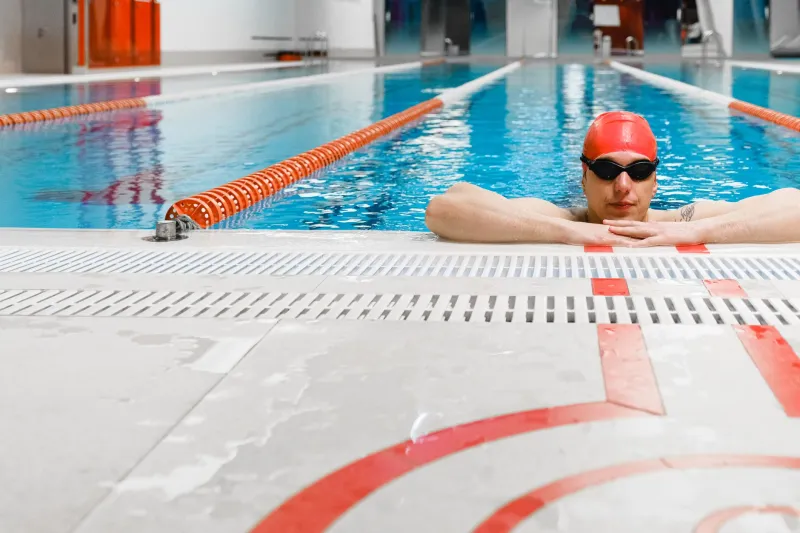
The pool hall is the centre’s nave, and it makes no apology for it. Tiled walls in a colour best described as municipal blue. A ceiling that has absorbed decades of steam and now carries a faint bloom of condensation like a patina. Lane ropes slung across the water in alternating colours. Somewhere, a whistle.
What strikes you, if you are inclined to read buildings the way other people read menus, is how little decoration there is. The water is the decoration. The light bouncing off it, up onto the walls, is the lighting scheme. The echo is the sound design. No one commissioned any of this, and yet it works — not because it is beautiful in any conventional sense, but because every element has been asked to do exactly one job and has agreed.
The acoustics deserve their own paragraph. In a pool hall, sound behaves like a rumour: it travels further than it should and arrives slightly distorted. A child’s shout from the shallow end reaches you at the deep end as a kind of amplified squeak. The lifeguard’s whistle cuts through it all with the authority of a referee. It is one of the few British interiors where you are never quite alone with your thoughts, and that is the point. Swimming is a solitary act conducted in public, and the room is built to remind you of that.
Painted Lines and the Grammar of the Sports Hall
Next door, the sports hall is a different kind of honest. It is essentially a big box, but the floor is a document. Painted lines in red, blue, yellow and green crisscross the wood like a municipal palimpsest: netball here, badminton there, five-a-side at the weekend. The lines do not quite agree with each other. They overlap, contradict, and occasionally dissolve into a smear where a trolley has been dragged.
This is not sloppiness. It is scheduling made visible. A sports hall is a room that changes costume five times a day, and the lines are the seams showing. The retractable basketball hoops, the stack of folding tables, the cricket nets that unroll from the ceiling — all of it speaks to a building that has been asked to be many things and has said yes to all of them.
The visual criticism is easy: the signage is often appalling, the noticeboards are a riot of laminated A4, and the clock has been wrong since a previous administration. But the room itself is a small masterclass in adaptability. It does not try to be a cathedral. It tries to be a space where a netball match, a badminton club and a children’s party can all happen without anyone feeling like they are in the wrong room. That is a design brief most architects would kill for.
The Laminated Timetable: A Family’s Constitution
Back in the lobby, past the vending machines that hum like distant traffic, there is the timetable. It is laminated, usually, and pinned to a noticeboard with a handwritten correction in biro beneath the plastic: ‘No lane swim 2-4pm, sorry.’ This document governs weekends. It tells you when the pool is given over to aqua-natal, when the sports hall belongs to the local martial arts club, when the ‘family fun session’ will fill the shallow end with inflatables and shrieking.
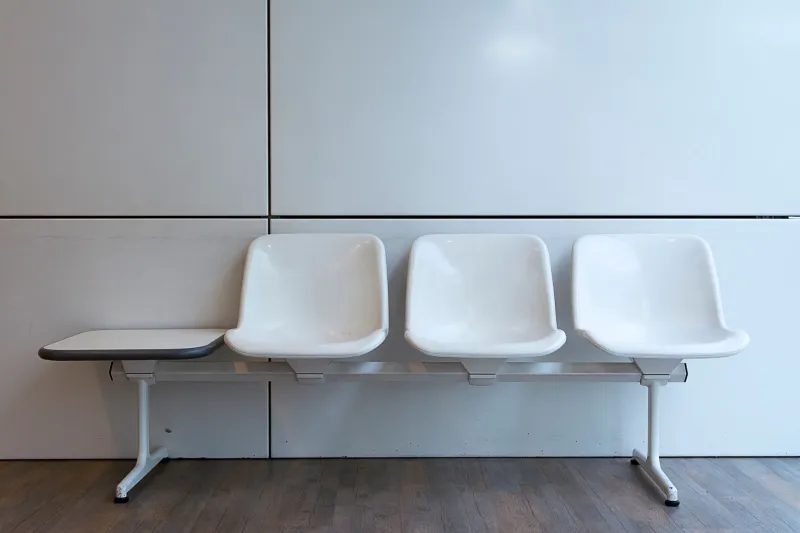
The timetable is also a portrait of a community. You can read a town in its leisure centre schedule: the early-morning lane swimmers, the retired couples who come for the 9am aqua class, the school groups that arrive in a cloud of hi-vis, the birthday parties on Saturday afternoons with their carrier bags of supermarket cake. The vending-machine lobby is the waiting room for all of it — a space of plastic chairs and scrolling parents, siblings doing homework on their knees, the occasional smell of chips from a nearby café drifting in through the fire door.
It is not glamorous. It was never meant to be. But it is a genuinely public living room, and it operates on a kind of soft choreography that no branded ‘experience’ can replicate. No one is trying to upsell you a smoothie. No one is asking you to tag yourself in a photo. The building just wants you to know when the pool is free.
Honesty as a Design Principle
Here is the argument for the leisure centre as accidental civic architecture: it is one of the last British interiors that does not lie. The materials are what they are — breezeblock, steel, non-slip flooring, tiles that have been re-grouted more times than anyone can remember. The signage is functional to the point of bluntness. The changing rooms smell of disinfectant and faintly of despair, which is honest in its own way.
Compare that to the contemporary ‘leisure experience’ — the boutique gym with its mood lighting and branded towels, the hotel spa that asks you to whisper. Those spaces are designed to make you feel like a better version of yourself. The leisure centre makes no such promise. It simply provides a pool, a hall, a timetable and a place to buy a KitKat. In doing so, it offers something rarer: a genuinely democratic interior.
Everyone is equally undignified here. The CEO in the next lane is wearing the same verruca sock as the teenager. The shared showers are a great leveller. The dress code extends to ‘no jeans in the pool’ and little else. You can spend two hours here for the price of a coffee, and no one will ask you to validate your parking or join a loyalty scheme.
The Deep End
I am not arguing that every leisure centre is a masterpiece. Many are tired, underfunded, and held together by the goodwill of staff who deserve better. But the best of them — the ones with the 1970s pebble-dash and the pool hall that echoes like a cave — are quietly brilliant. They are rooms built for use, not for Instagram. They are honest about what they are, and in a country that increasingly sells its public spaces as ‘destinations’, that honesty feels like a design statement.
So next time you are in the lobby, waiting for a child to finish a swimming lesson, look up. The ceiling is probably stained. The clock is probably wrong. The timetable is probably laminated. And the whole thing is probably working exactly as intended. The deep end of democracy is not in Westminster. It is in a pool hall in a medium-sized town, smelling of chlorine, doing its job.